-Food Truck-
A modern, responsive web platform designed for a fictional food truck brand, highlighting vibrant branding, intuitive navigation, and a smooth user experience.
Overview
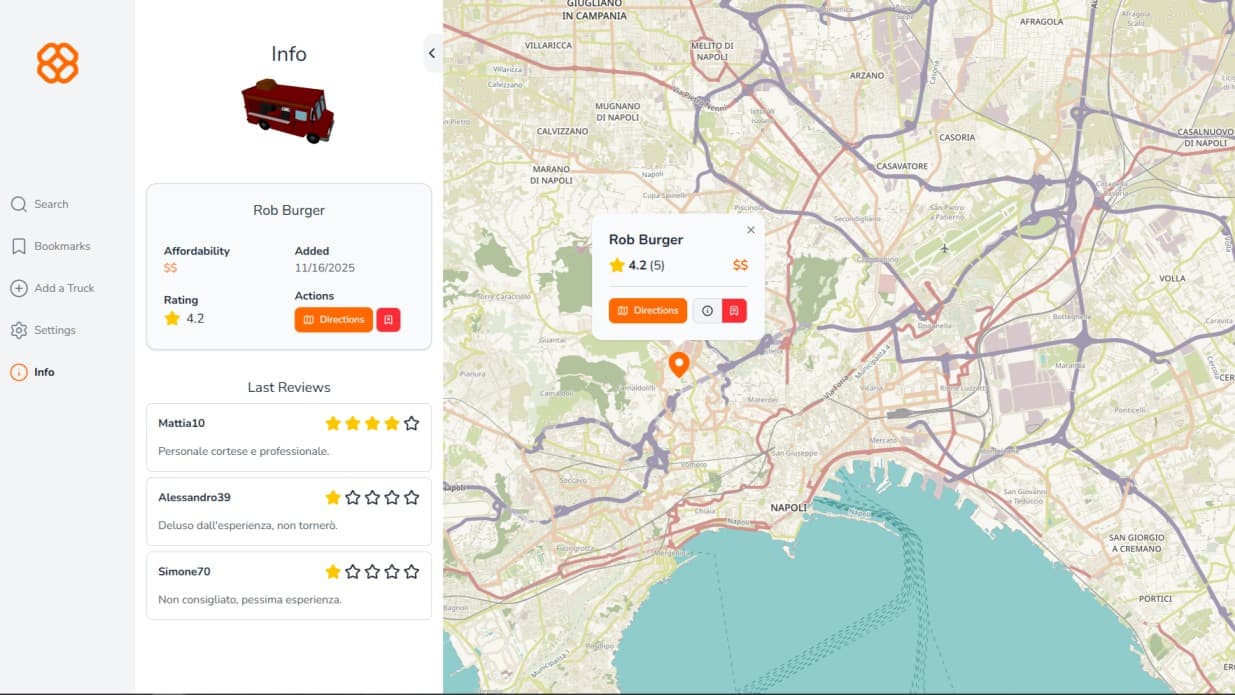
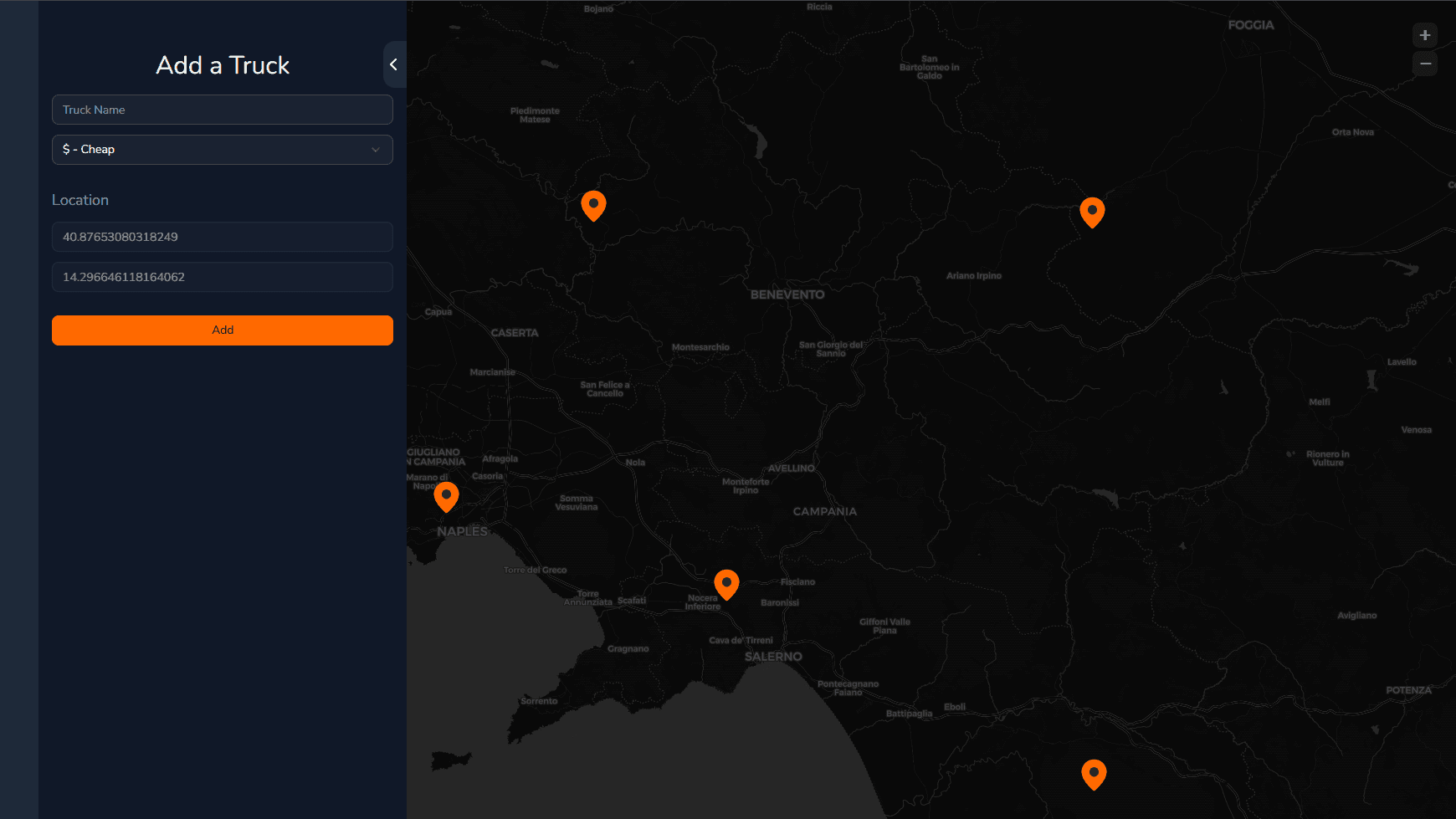
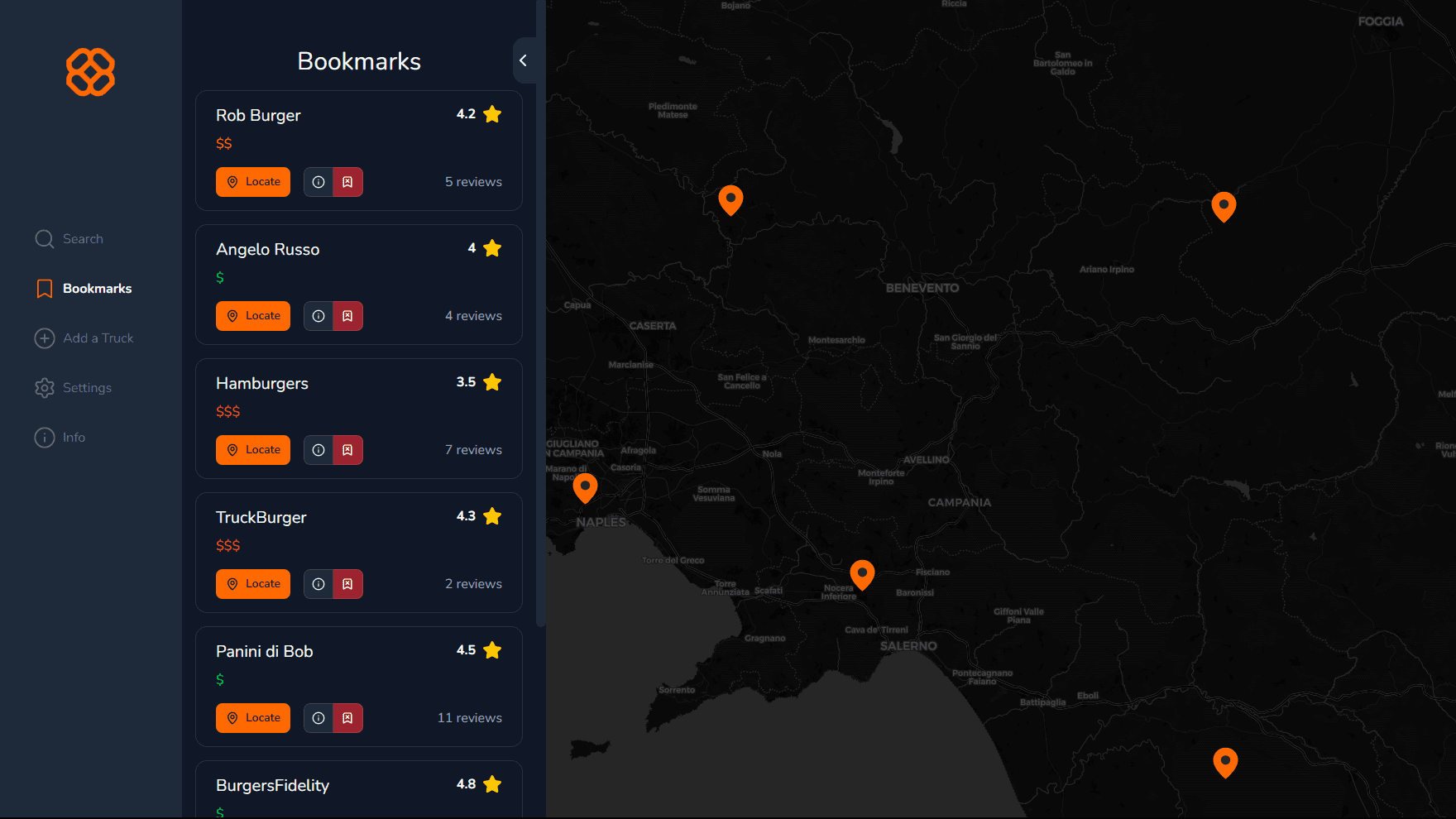
FoodTruck is a full-featured map-based application designed to track fast food trucks around the world. Users can browse truck locations, read reviews, add new trucks, search for trucks, and navigate directly via Google Maps links.
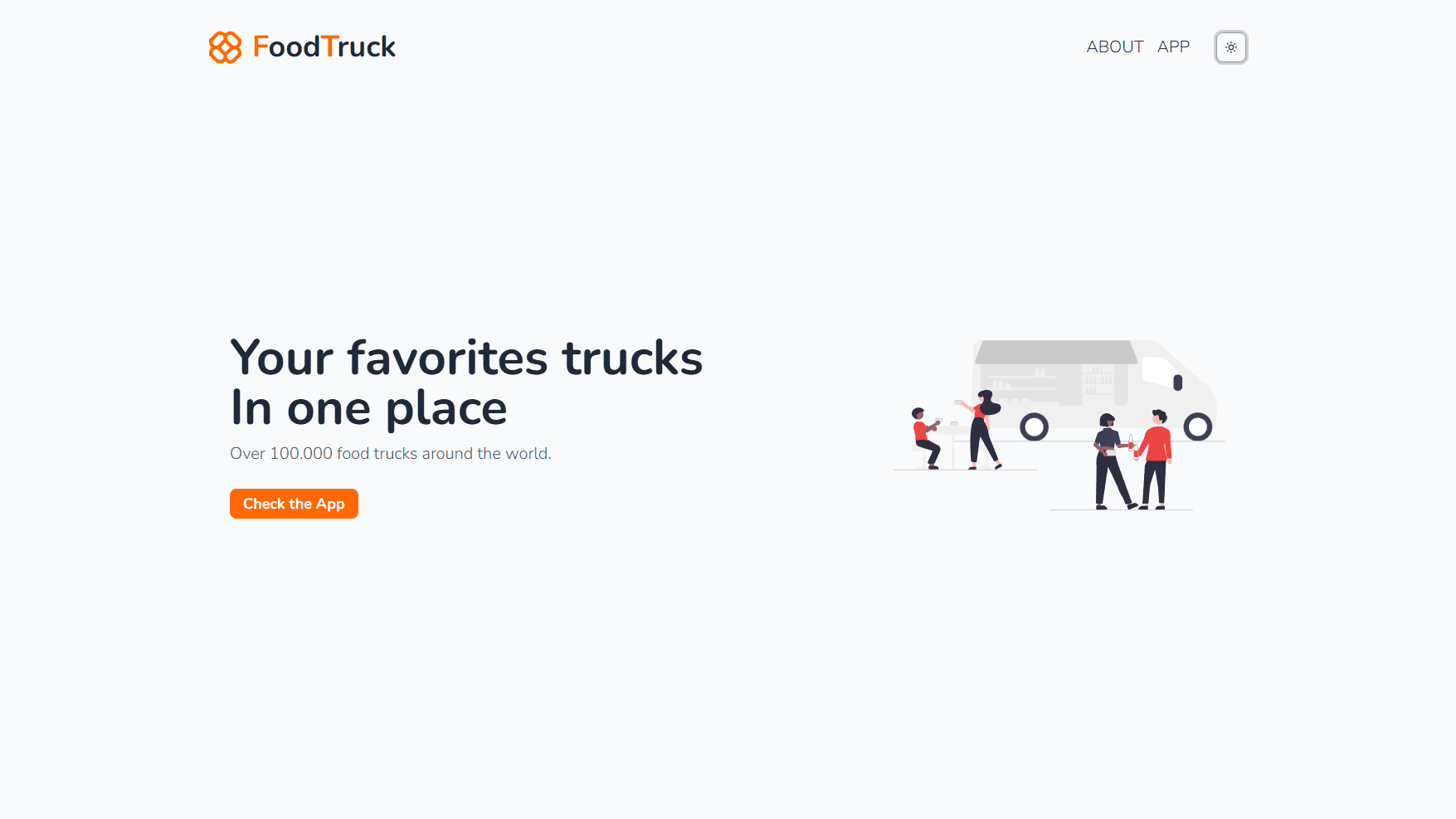
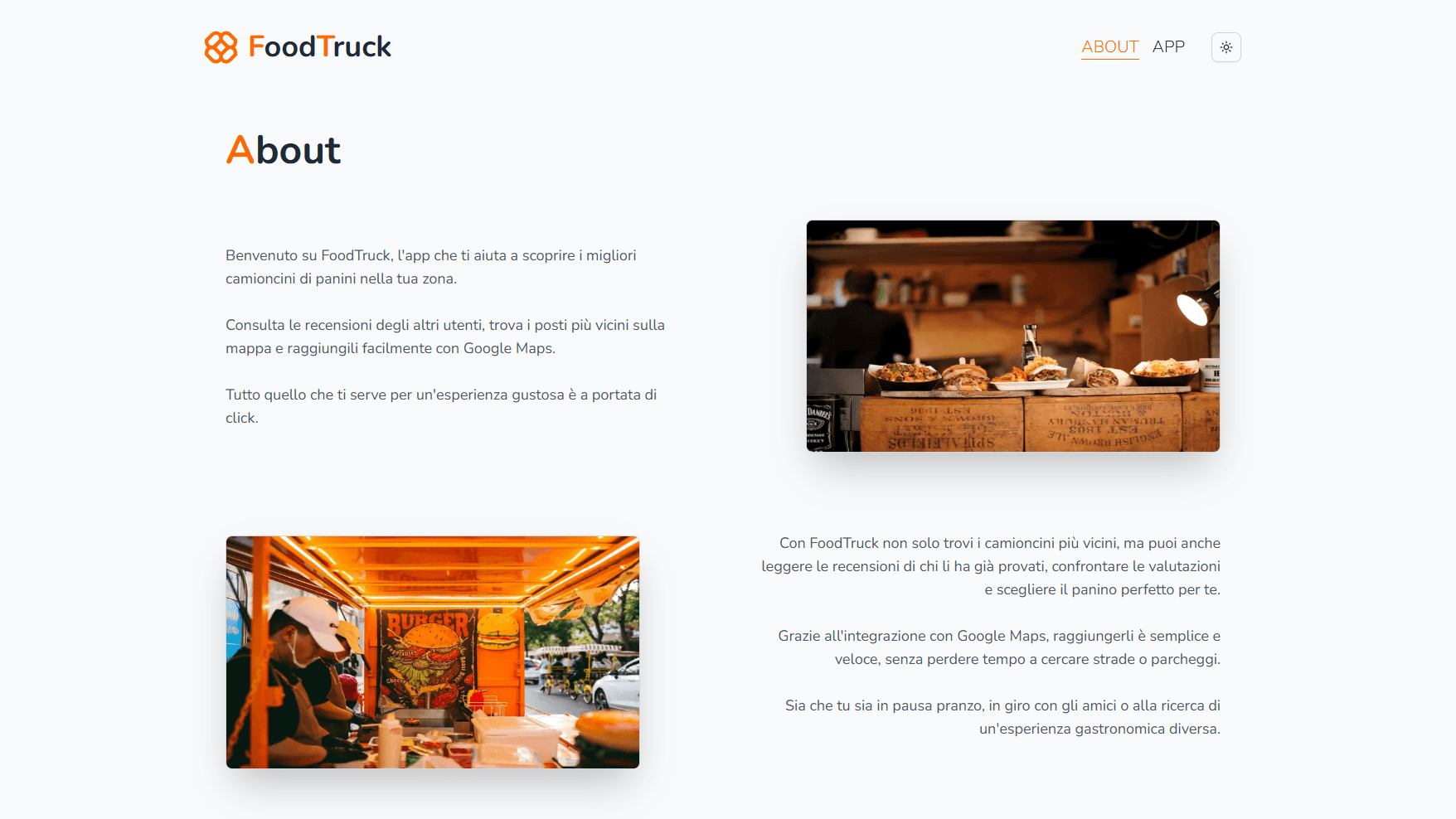
The app features a landing page with a hero section and CTA, an about page with a modern Z-pattern layout, a dark mode toggle, and an interactive map interface.
The project was built with React, Next.js, TypeScript, TailwindCSS, Supabase, and incorporates libraries like Leaflet, React Leaflet, Three.js, react-hook-form, lucide-react, react-hot-toast, and shadcn/ui.
Technical Decisions
-
React + Next.js: Provides a modular, component-based architecture with optimized page routing.
-
TailwindCSS: Used for fast, responsive styling and UI consistency.
-
Supabase: Handles backend data storage, user authentication, and reviews.
-
Leaflet & React Leaflet: Powers the interactive map interface with markers, popups, and layers.
-
Three.js: Implements a 3D model of trucks in the info sidebar for a more engaging experience.
-
Forms and Feedback: react-hook-form for forms and react-hot-toast for notifications.
-
Icons & UI Components: lucide-react and shadcn/ui for consistent, modern visuals.
-
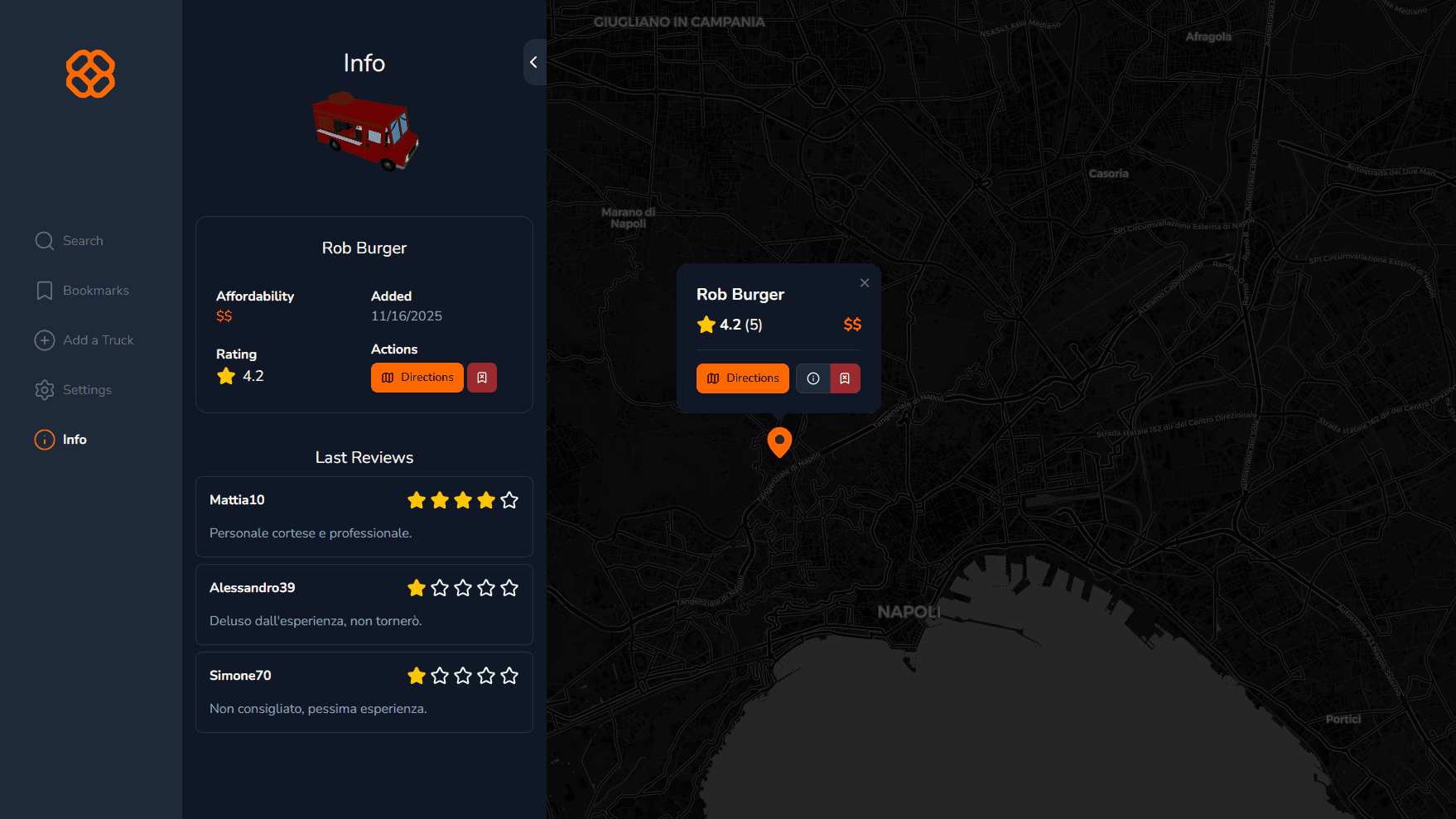
Dark/Light Theme Layers: Separate map layers enhance user experience for theme switching.
Challenges
One key challenge was structuring a full-featured map-based application with multiple interactive components, including markers, popups, a sidebar, bookmarks, search, and forms, while keeping navigation intuitive and performant.
Implementing dynamic interactions with markers and popups required careful state management and manual handling of events, as well as syncing sidebar content with the map. Ensuring smooth user experience across different components presented additional complexity.
Working with Leaflet was particularly challenging, as it is not integrated with TailwindCSS. I had to manually customize styles by selecting classes, handle popup events entirely by hand, and implement two separate map layers for dark and light mode to reinforce the UX across themes. This required precise attention to detail and strengthened my ability to solve complex frontend integration problems.
Designing interactive features like bookmarks, search, and adding new trucks taught me to optimize UX while managing multiple layers of state and events, making this project a very rewarding challenge.
Key Features
-
Landing Page & Hero Section: Includes illustrations, CTA, and introduction to the app.
-
About Page: Explains the app with Z-pattern hero sections, images, and text.
-
Dark Mode Toggle: Switch between light and dark themes seamlessly.
-
Interactive Map: Featuring markers for trucks, popups with truck info, and navigation links to Google Maps.
-
Sidebar Functionality: Searchbar for finding trucks, bookmarks for saving favorites, and dynamic forms for adding new trucks.
-
Truck Information Panel: Displays truck details, affordability, rating, creation date, reviews, bookmarks, and 3D interactive model with Three.js.
-
Form & Search Integration: Users can add new trucks with name and affordability level, and search existing trucks with filters.
-
Settings Page: Customize app theme (light, dark, or system).
Future Improvements
-
Dynamic user location: Center the map based on the user’s real-time position.
-
Add reviews: Allow users to submit reviews for trucks.
-
Enhanced filtering: Add filters by affordability, rating, or category.
-
Push notifications: Alert users about new trucks or updates in nearby areas.
-
Analytics & statistics: Show popular trucks, top-rated locations, or trends over time.
Lessons & Final Considerations
Building FoodTruck strengthened my ability to develop interactive map-based applications with complex UI interactions. Working with Leaflet and React Leaflet taught me how to handle events manually and integrate maps with modern frontend frameworks.
Implementing separate dark/light layers reinforced the importance of theme-aware UX design, while creating dynamic popups, sidebar content, and search/bookmark functionality enhanced my state management and event handling skills.
Integrating a 3D model with Three.js added an extra layer of interactivity, demonstrating how creative UI elements can enrich the user experience. This project provided hands-on experience in front-end architecture, complex state
Food Truck
Built in
November, 2025Stack role
Full StackWorked on for
7 daysHosted on
VercelTech Stack

Next.js

React

Supabase

TailwindCSS

Typescript

Vercel

Shadcn/ui

Lucide React

React Hot Toast

React Hook Form

Leaflet

React Leaflet
Three.js
Next project
Inka
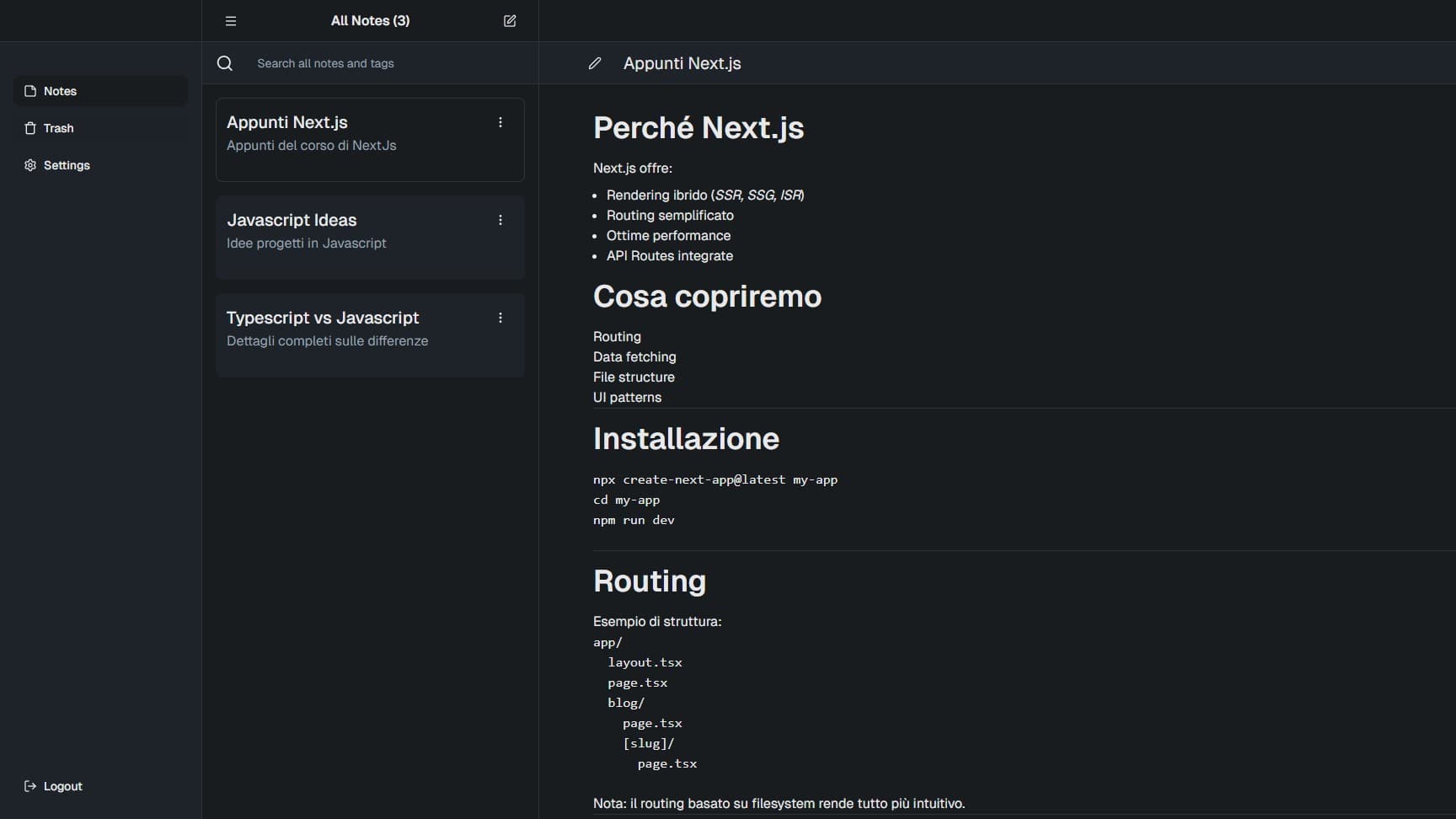
Inka is a fast, lightweight note-taking app designed for clarity and focus. It lets users create, edit, and organize notes with a clean text-editor experience inspired by modern knowledge tools.
See more